






Digital badges support educational goals when the institution connects an assessed outcome to explicit criteria, evidence and an issued achievement—not when it simply awards an attractive image.
Choose the achievement before the badge
Start with a learning outcome that can be observed. Specify the task, assessment method, minimum standard and approving team. Attendance and demonstrated competence are different achievements; the badge description should say which one was recognized.
Use an outcome–evidence–recognition checklist
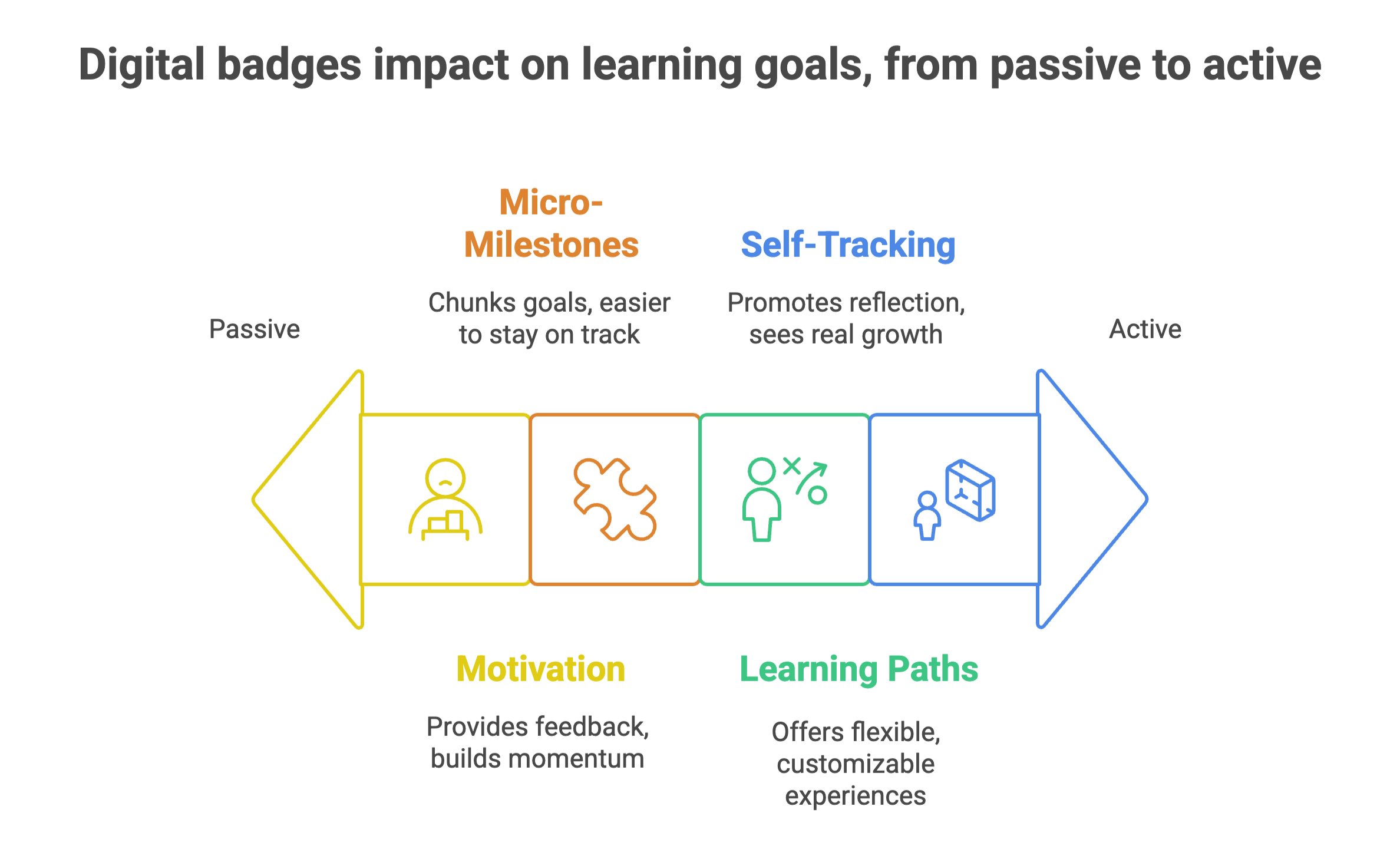
For each badge, record: the outcome in the programme’s language; the assessment artifact or protected evidence reference; the assessor’s decision; the issuer; the award date; and any applicable expiry or status rules. For assessed capabilities, use institution-reviewed skills mapping rather than treating a badge label as proof of every related skill.
Recognise a research-methods milestone
A department could recognize a learner’s completed research proposal after rubric-based assessment. The credential could identify the achievement and criteria while keeping confidential feedback in an authorized system. This example is a programme design pattern, not a claim about a named customer or a ready-made integration.
Use a standard where it fits the programme
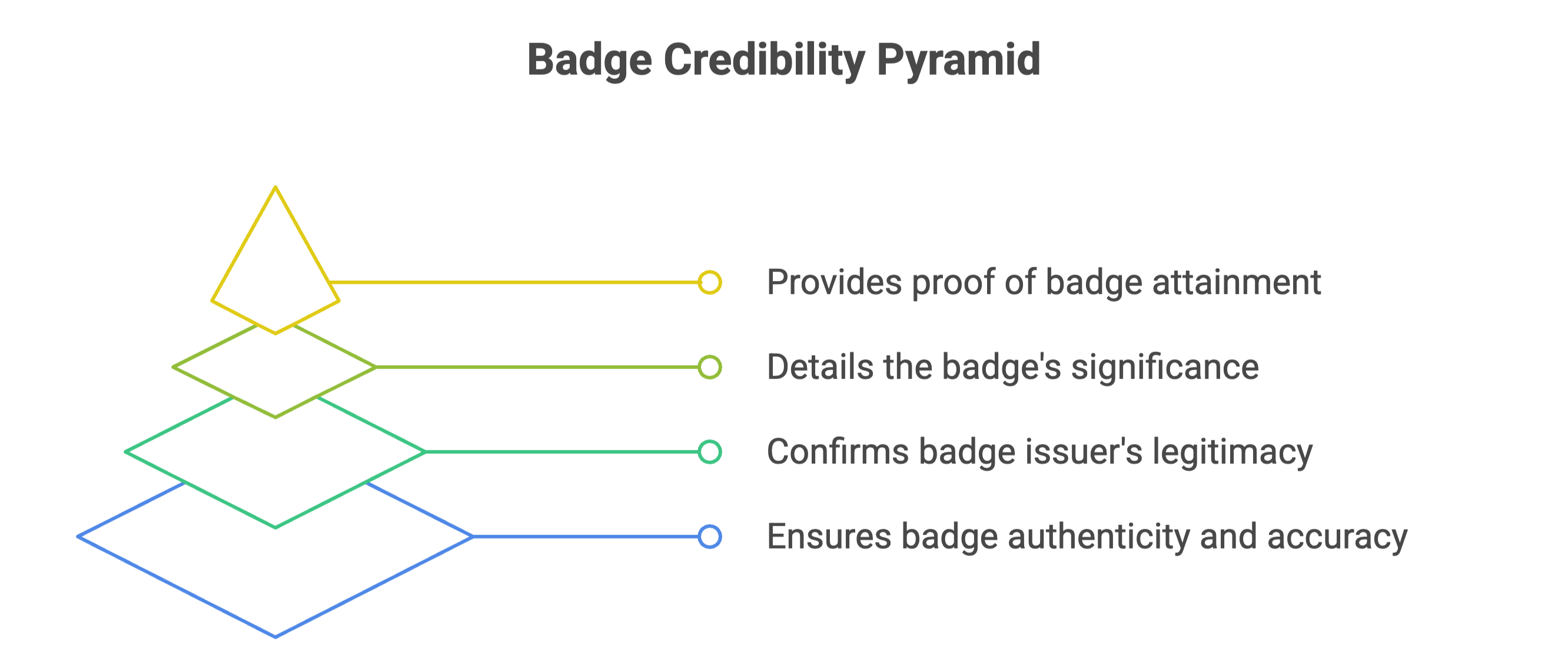
An Open Badges 3.0 achievement credential can describe issuer, achievement and evidence. Confirm the supported proof mechanism and receiving-system compatibility. A digital badge image alone does not establish conformance or interoperability.
Keep the learner’s record coherent
Related achievements can contribute to a Comprehensive Learner Record with issuer provenance. Decide who may see evidence, how corrections are handled and whether the achievement remains meaningful after a programme changes.
Evaluate educational usefulness, not just issuance volume
Review assessment completion, learner understanding and the burden on academic staff. Sharing and page views measure engagement, not skill attainment or employment. The institutional credential lifecycle helps teams agree these controls before rollout. See anonymous implementation evidence for documented examples without assuming the same results.
Plan your next step
Discuss the actual award, evidence and implementation requirements with your institution. Request an institutional demo.
Frequently Asked Questions
Does earning a badge automatically prove a skill?
No. The achievement criteria and assessment evidence determine what was demonstrated. A badge can also recognize attendance or participation.
Does an Open Badge replace a degree?
No. It recognizes the achievement described by the issuer; institutions decide how that achievement relates to a programme or qualification.