




Optional credential sharing gives an institution another way to make its programmes visible. This guide is for education and training teams deciding how to support recipient sharing and measure awareness without confusing views with enrolment, learning or hiring outcomes.
That’s the magic of brand awareness—and in 2025, it’s no longer just about ads or logos. It’s about visibility in the digital spaces where real conversations happen. Think of digital credentials like smart, shareable proof of achievement that quietly carry your institution’s name across LinkedIn profiles, email signatures, and beyond.
In this blog, we’ll break down how digital credentials are helping schools, training providers, and even government agencies stand out online, without shouting.
So, what is brand awareness?
Think of it as being recognized in a crowded room. If people know your name, what you do, and why you matter—they’re more likely to trust you, buy from you, or choose to study with you.
Brand awareness isn’t about showing off. It’s about staying top of mind when a student is hunting for a course… or when an employer is scanning resumes for credible certifications.
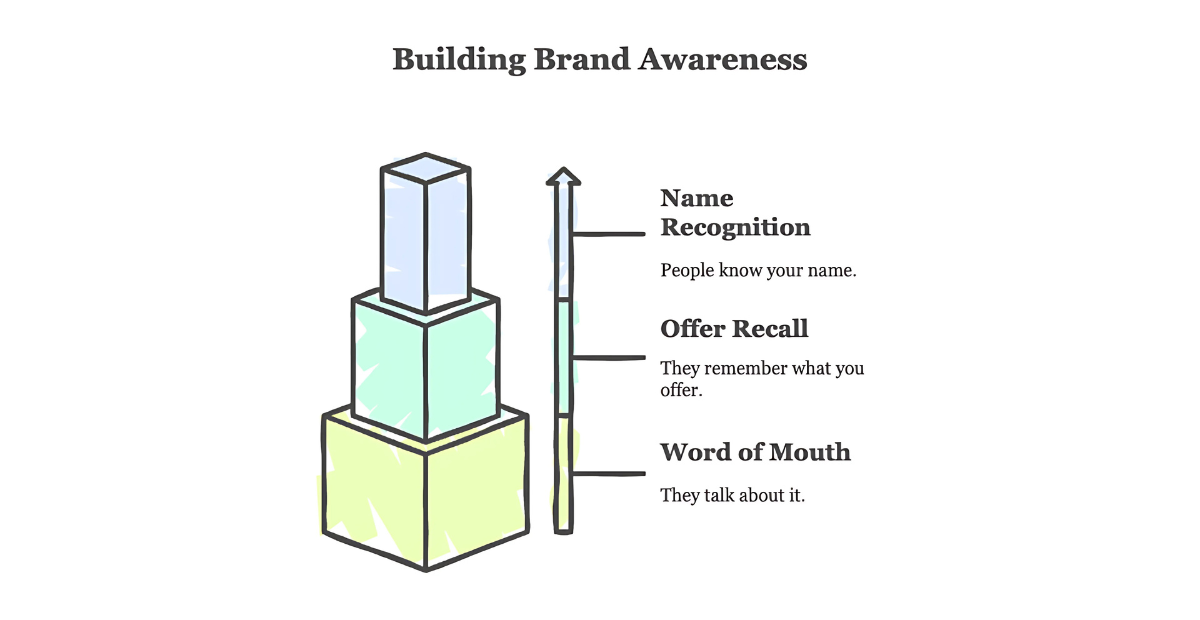
At its core, brand awareness means:
-
People know your name.
-
They remember what you offer.
-
And most importantly—they talk about it.
Why traditional methods aren’t enough anymore
Billboards, brochures, email blasts—they still have a place. But let’s be real: Gen Z and Millennials? They live online.
If your institution isn’t actively building presence through authentic, social, and shareable content, you risk becoming invisible.
The world is moving fast. Algorithms change. Attention spans shrink.
Institutions that rely only on traditional brand promotion strategies are finding it harder to keep up.
That’s where digital credentials step in.
What are digital credentials (and why should you care)?
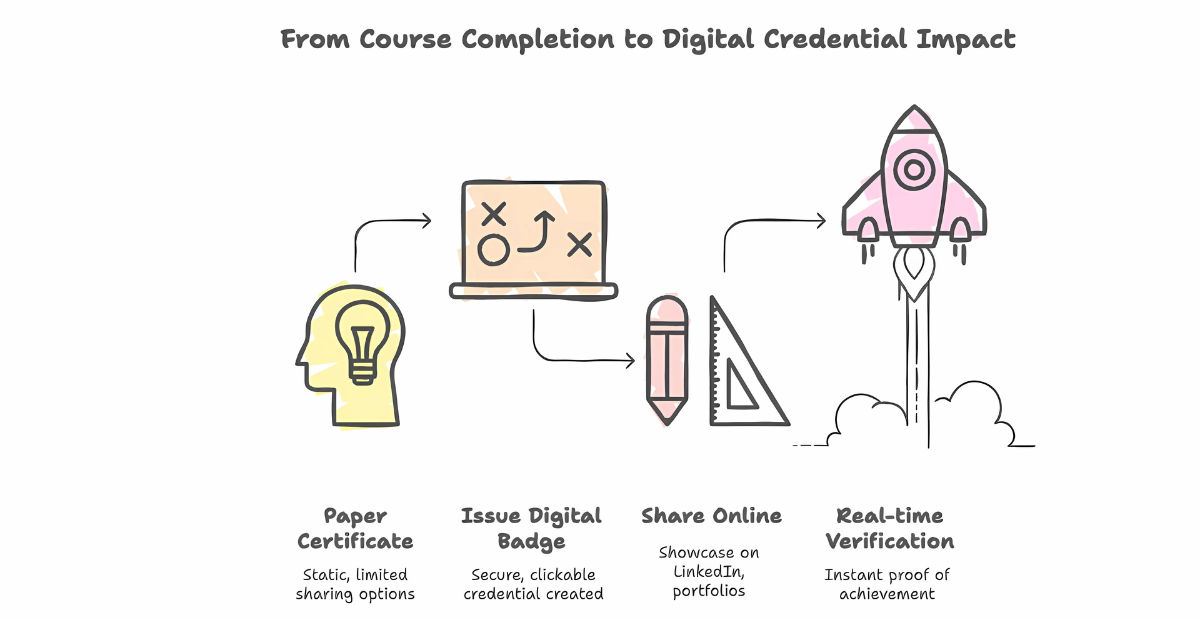
A student completes an assessed data-analytics course. Its award can describe the criteria, issuer and dates. Metadata makes the claim interpretable; supported proof, issuer authority and status checks address verification.
It can be:
-
Shared on LinkedIn, Instagram, or digital portfolios.
-
Embedded in resumes or email signatures.
-
Verified in real-time by anyone who clicks the link.
Supported proof can make a record tamper-evident. Delivery, receiver compatibility and continued verification depend on the actual implementation; no format eliminates every false claim.
But that’s just the surface. What makes digital credentials truly exciting in 2025 is their built-in adaptability. These aren’t just static awards—they’re dynamic tools that evolve with the learner and carry the brand wherever they go. Each badge or certificate is equipped with metadata—details like issuing institution, criteria met, and skill domains—which builds trust at a glance.
Curious about common doubts learners and institutions face? Explore debunked myths about digital badges.
And for institutions? They act like tiny digital ambassadors. Every time a badge is shared, your logo goes with it. Every click back to your site is a potential enrollment, inquiry, or conversation — one of the less obvious reasons organizations use verifiable credentials beyond just security and verification.
In short, digital credentials don’t just prove something valuable happened—they show who made it happen: you.
Further Reading : What is the difference between a Certificate and a Digital Credential?
Okay, but how do digital credentials actually boost brand awareness?
Let’s walk through it, one platform at a time.
-
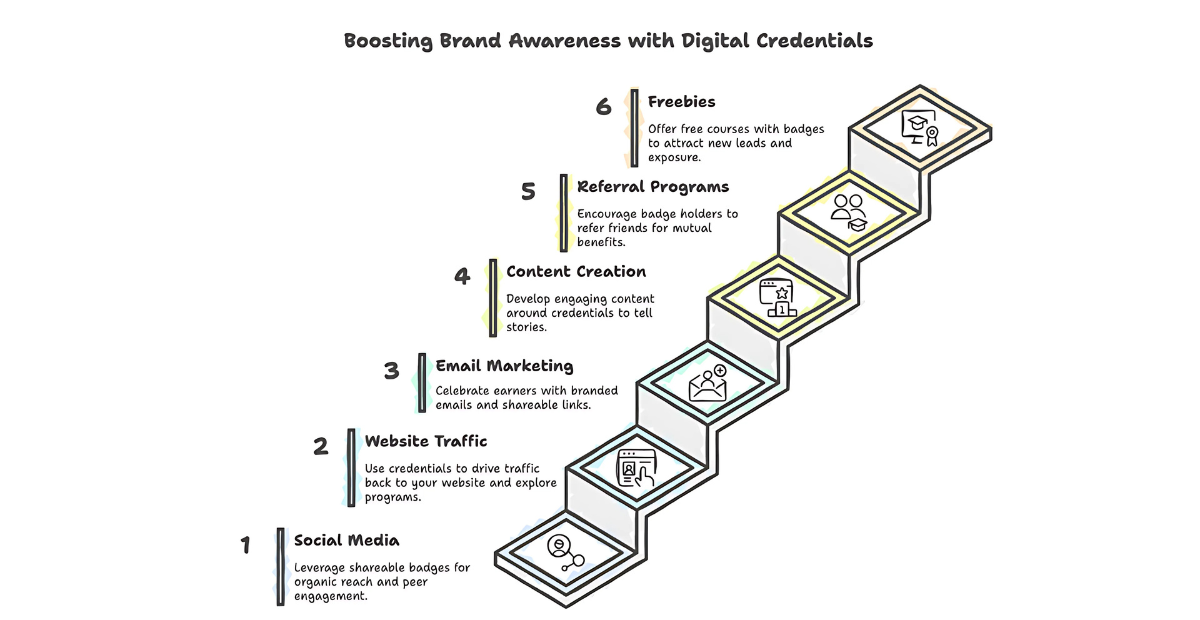
Social Media: The snowball effect
You’ve seen it before. Someone posts a badge on LinkedIn: “Proud to have completed XYZ with ABC University!”
That one post? It might:
-
Hit hundreds of views.
-
Get liked and reshared by peers.
-
Show your institution’s name in feeds you’d never reach otherwise.
This is earned media, the holy grail of brand awareness. It’s not you saying how great your brand is—it’s your students, alumni, and partners doing it for you.This is a similar concept to building high-quality backlinks, where a link from a reputable source is a vote of confidence. One of the best ways to achieve this is through guest posting on relevant sites.
Example: A learner shares a leadership-course award with its programme description and verification link. Track views and visits to understand how credential sharing supports programme visibility.
That’s the power of shareable proof.
-
-
Your Website: A quiet traffic machine
Most university websites are underused brand assets. But when credentials link back to your verification page or a branded landing page?
Boom—organic traffic.
Every time someone clicks a badge or certificate link, they’re led back to your platform. Maybe they start reading about other programs. Maybe they explore upcoming courses. Maybe they bookmark your site for later.
That’s passive awareness with a purpose.
To learn how organizations strategically integrate credentials into their outreach plans, read our guide on imposing digital credentials into your marketing strategy.
-
Email: Still alive and still effective
Yep, email is still a big deal. Especially when it’s personal and useful.
Some tools like timetoreply helps businesses to measure and track productivity of their business and team.
Here’s the trick: Don’t just send digital credentials—celebrate them.
-
Congratulate earners with a branded email.
-
Include “Share on LinkedIn” or “Add to resume” buttons.
-
Add links back to your courses or learning pathways.
Now you’ve turned a simple email into:
-
A recognition moment
-
A marketing opportunity
-
A traffic driver
And guess what? People do click and share when the email feels like an achievement.
-
-
Content: Let your credentials tell a story
Ever heard the phrase, “Content is king?”
It still rings true—but only if your content is good.
And digital credentials? They’re full of content gold.
Here’s what you can create from just one badge:
-
A blog post: “Meet our Top 5 Earners of the Month”
-
A consented learner account, clearly separated from any unmeasured hiring-impact claim
-
An Instagram Reel: A quick win from badge to job offer
-
A tweet thread: Breakdown of what the badge covers
You’re not just issuing a badge. You’re telling a story. And stories get shared.
-
-
Referral Power: Let students be your ambassadors
Referral programs are nothing new. But here’s the twist:
Let digital badge holders become your marketers.
Offer simple perks:
-
Share your badge + tag us = 10% off your next course
-
Refer a friend = you both earn a bonus micro-credential
Now your most motivated learners are driving awareness for you, authentically and at scale.
And the best part? It feels like a reward, not an ad.
-
-
Freebies: Give value, gain visibility
Who doesn’t love a freebie?
Try this:
-
Offer a free micro-course on a trending topic.
-
Upon completion, award a verifiable badge.
People sign up. They share their badge. Your name spreads.
Now you’ve gained:
-
New leads
-
Brand exposure
-
A growing learner community
All because you gave something away with real value.
-
-
AI Marketing: Your Secret Weapon
AI is making waves in digital marketing, also known as AI marketing, and it’s a natural complement to a strong digital credential strategy. The insights and analytics from AI tools can help you maximize the impact of your credentials.
Here’s why it works :-
-
Data-Driven Improvements: AI tools analyze user behavior to show how and where digital credentials are shared, helping refine your strategy.
-
Reviewed follow-ups: staff can draft optional next-course or sharing guidance without uploading unnecessary learner data to third-party AI tools. Review accuracy, consent and relevance before sending.
Pro Tip : Use AI tools to predict trends in sharing patterns for your credentials. This helps you stay ahead of social media or content trends within your industry.
A training team reviews aggregate credential engagement and tests a programme-page message.
-
A documented example: IBM’s credential programme
IBM’s own training credentials page describes badges and certifications and encourages professional sharing. That supports the existence and stated purpose of its programme—not an assertion that badges solved a talent shortage, generated recruitment gains or prove the results of CertifyMe customers. Institutional teams should distinguish published programme facts from their own measured brand outcomes.
The Secret Sauce: White-labeling + Verification = Instant Credibility
Here’s something not often talked about…
When your digital credentials are white-labeled, they carry your institution’s name, logo, and signature. Not a third-party brand.
That means:
-
Your learners remember you, not just the platform.
-
Employers associate your name with credibility.
-
You get full branding credit for every badge earned.
Plus, verifiable credentials come with metadata—like issue date, skills covered, and issuing authority. That level of transparency builds instant trust.
This is more than just design—it’s about identity. Every time a badge is clicked, your institution is reintroduced to someone new, reinforcing your values, programs, and professionalism. It’s like putting your name on every handshake, every milestone, and every achievement your learners earn. And in an ecosystem built on credibility, that kind of consistent brand reinforcement is priceless.
White-labeling also makes your digital credentials feel more intentional.
When a student sees a badge that looks like it came straight from their university—not a generic provider—it feels more personal, more official, and more memorable. It signals care and attention, two qualities that go a long way in building trust and admiration for your institution.
Digital Credentials in Education, Training, and Finance: A Smart Fit
Institutions across industries are catching on:
-
Universities use them to celebrate course completions.
-
EdTech platforms embed them in bootcamps and micro-courses.
-
Banks and finance firms issue badges for compliance and training programs.
-
Government agencies leverage them for workforce development.
Each of these sectors values two things: trust and visibility.
Achievement records can make an issuer’s claim easier to inspect. Education, finance and government teams still need appropriate authority, assessment, identity and status checks; no absence of delay or manual review is guaranteed.
What makes them especially smart in 2025 is their adaptability across learning models—whether it’s hybrid classes, fully online programs, or internal employee training. As more organizations embrace microlearning, modular education, and just-in-time training, digital credentials become a perfect fit to capture and communicate those moments of mastery.
Event and meeting professionals are also leveraging digital credentials to increase trust and engagement—here’s how.
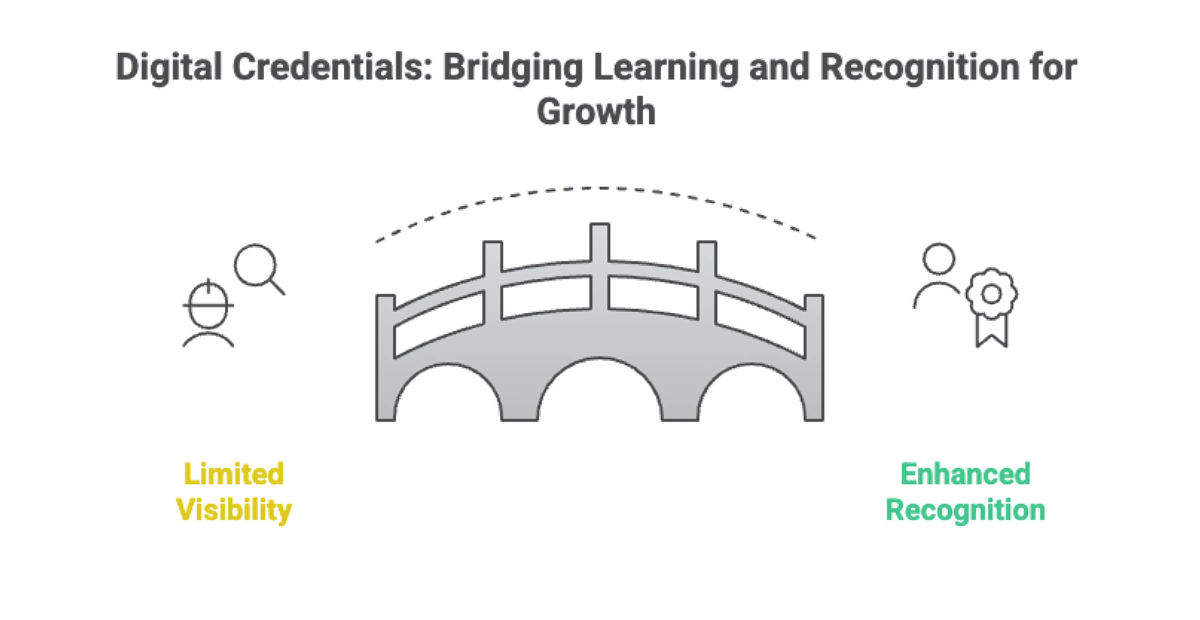
They bridge the gap between informal and formal learning, giving learners—and institutions—a verifiable way to show what they know.
The result? A growing ecosystem where digital credentials serve both personal growth and institutional marketing. That’s not just efficient—it’s strategic.
If your goal is visibility + credibility, digital credentials check both boxes.
Let’s Wrap It Up: Why This Matters Now
In 2025, attention is currency.
If people don’t know your name, they can’t choose you.
And while flashy ads may catch eyes for a moment, digital credentials stick. They live in resumes, social feeds, and portfolios. They get clicked, read, verified—and remembered.
So if you’re a university registrar, department head, or marketing coordinator wondering how to get your brand seen without shouting into the void?
Start with digital credentials.
They’re not magic. They’re just smart.
Want to see how it works?
Building brand awareness in 2025 isn’t about shouting louder, it’s about being seen in the right moments. Digital credentials give universities and organizations that visibility by making every achievement shareable, trackable, and trust-worthy.
Whether it’s a student proudly posting a badge or a recruiter clicking a verified certificate, each digital credential quietly tells your story. And the more those stories get shared, the more your brand earns attention—without needing to constantly chase it.
For registrars, digital credentials support issuance and verification workflows. For recipients, they provide a shareable record of an achievement.
Discuss your institution’s branding, issuance and verification requirements with CertifyMe.
Platforms like CertifyMe make it easy:
-
Issue sleek, branded credentials in minutes
-
Track engagement and shares
-
Customize metadata and verification pages.
From white-labeled design to real-time verification, everything is built to make your job easier and your brand more visible.
Ready to see it in action? Book a demo call and explore how digital credentials can quietly speak volumes about what your institution stands for.
Measure awareness without inventing attribution
Define eligible recipients, optional shares, credential-page visits and programme-page visits separately. Record the period, campaign identifiers and consent rules; filter bots and duplicate views where the measurement system supports it. Enquiries or applications require their own attribution method. A view is not an enrolment, a hire or a causal brand lift.
Keep learning evidence prominent and marketing secondary. Use credential analytics for the measurement scope and approved anonymous case studies for bounded first-party implementation evidence—not promises of equivalent results.
Frequently Asked Questions
Does a shared credential guarantee new enrolments?
No. Sharing may expose a programme to a recipient’s network, but reach, enquiries and enrolments must be measured separately.
What does IBM's programme demonstrate?
IBM’s own page documents badges and certifications. It does not prove CertifyMe customer outcomes or a causal marketing effect.