




Summary
Why Digital Credentials are gaining popularity?
Digital credentials have changed the face of digital authentication. Often issued as a reward to display a person’s competency of skills and abilities, digital credentials have paved their way upwards in the digital working environment.
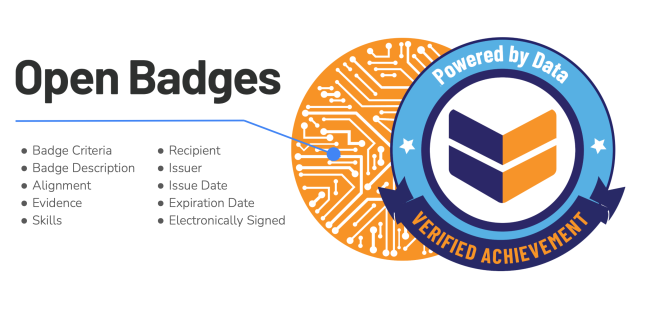
Although still in the developing stage, digital credentials that include digital certificates and digital badges, have been here for a while now. Openbadges was co-authored by Mozilla, Peer2peer University, and MacArthur Foundation in 2010-11. Since then, it has risen to its popularity for all the right reasons.
Digital credentials developed exclusively as an equivalent to the paper-based certification proves to be the most effective and less time-consuming credentials cutting the issuing costs, production costs, maintenance costs, and verification cost.
Many of the major perks of issuing digital credentials include easy and quick sharing, viewing, and verifying of the credentials. Digital credentials can be shared across all digital platforms including social media and social-networking sites, it can be displayed in the portfolio or CV or on a resume.
Digital credentials are most secure and can be encrypted to avoid duplication or manipulation of the original credential document. Backed with robust meta-data, digital credentials are trackable and verifiable, providing evidence to the achievement of the qualification. Digital credentials come with blockchain technology facilitating its issuing and tracking.
Difference between Digital Certificates and Digital badges:
Both digital credentials are the digital equivalent to the paper-based traditional certification.
Digital badges are low-stake credentials usually rewarded for an individual’s progress in the program, or accomplishment of a soft skill.
Digital certificates are high-stake credentials issued after completion of a course or a degree.
To give an example of both, suppose, a certification has four modules to complete. The learner will gain a digital badge after progressing through each module and a digital certificate after the completion of the entire course.
Many organizations, universities, and online education providers are now shifting to digital credentials and are tend to grow more in the upcoming years.
In Conclusion:
Digital Credentials are gaining popularity among organizations and online education providers for their ability to easily share, view, and verify. It also cuts the manufacturing costs and issuing costs that come in a paper-based certification.
Frequently Asked Questions
What's the difference between a digital badge and a certificate?
I usually tell people that badges are for smaller wins—like finishing a module or learning a specific skill. Certificates are the ‘heavy hitters’ you get for finishing a whole degree or a long course. They work together to show your full learning path.
Why are organizations ditching paper for digital?
Honestly, it’s the cost and the hassle. Printing, mailing, and manually verifying paper is a huge drain on resources. Digital credentials are way cheaper to issue and they provide instant proof, which is what everyone wants these days.
How do I know a digital badge is legit?
Every badge is backed by metadata. It’s not just a pretty picture; it has data ‘baked in’ that tells you exactly who earned it and who gave it to them. You can’t just copy-paste the image and claim you earned it.
Can digital credentials help me get a job?
Definitely. In my experience, having a verified badge or certificate on your LinkedIn profile makes you stand out. It gives employers concrete, verifiable proof of what you can actually do, rather than just what you say you can do.