
 Author :

TL;DR
-
Cryptographic checks detect changes to protected data when verified; they do not prevent every fraud or automatically revoke the issuer’s original record.
-
Bulk workflows can reduce printing and manual handling. Savings depend on volume, platform costs and implementation.
-
Recipients can share a credential with compatible verification services. Availability, status and access depend on the required resources.
-
Issuers can include award criteria, skills and supporting evidence. Field requirements vary by the applicable credential standard and profile.
Benefits of Verifiable Credentials for Organisations
Reduced Risk of Forgery and Tampering
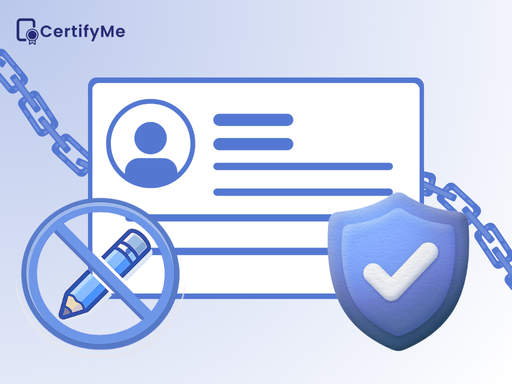
A verifiable credential does not require an immutable ledger. Its securing mechanism lets a compatible verifier detect changes to protected data when checking the proof. Altering a copy does not automatically revoke the issuer’s original credential.
Integrity checks reduce the need for a human issuer to inspect every request. They address one part of credential fraud: issuer authority, credential status and the presenter’s identity still require appropriate checks.
Scalable Credential Management for Issuers
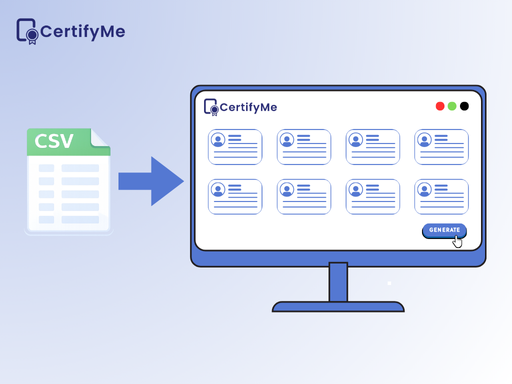
CertifyMe supports bulk issuance using prepared recipient data and approved templates. Validate the award decisions, fields and delivery workflow before scheduling a batch; throughput depends on its size and the agreed implementation.
Reusable templates and validated mappings improve consistency. They do not eliminate human error: incorrect input data can still produce an incorrect award.
Cost and Resource Efficiency
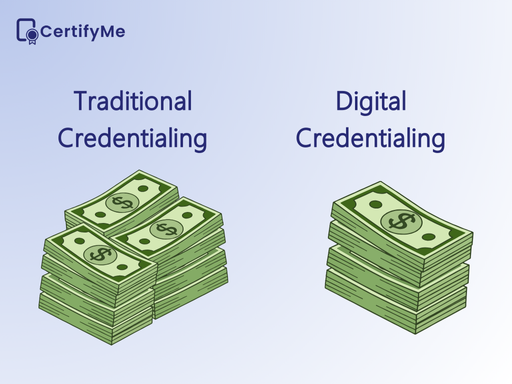
Digital delivery can reduce printing, packaging and postage compared with a paper-based workflow. Digital certificates still incur platform, implementation, support and record-management costs.
Estimate the total cost for the institution’s expected volume, corrections, integrations and retention period. Digital delivery does not establish a guaranteed saving or a negligible difference between small and large programmes.
Improved Brand Visibility for Issuers
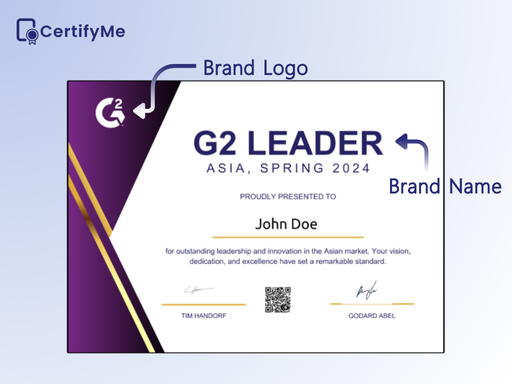
Every time a recipient shares their verifiable credential, it includes the issuer’s branding and links back to a hosted verification page. That means every LinkedIn post, every email signature, every digital resume carrying your credential is also carrying your name and logo to a new audience.
Traditional certificates don’t do this. Once a paper certificate leaves your hands, it stops working for you. A verifiable credential keeps doing it for as long as the recipient shares it. Organizations actively using this for brand awareness find that recipients become passive advocates every time they share a credential online.
Benefits for Recipients of Verifiable Credentials
Self-Service Verification with Clear Dependencies
Traditional certificate verification requires the verifier to contact the issuing organization, wait for a response, and hope the right person is available. That process introduces delays for both parties.
Cryptographic proofs support integrity and issuer checks. They are not the same as encryption for confidentiality. A compatible verification service uses the required keys and applicable status information; an issuer may not need to answer each request manually, but verification resources must remain available.
Easy, Secure Sharing Across Platforms
A physical certificate has one natural lifecycle: issued, received, stored. Sharing it means scanning, emailing a copy, and hoping the recipient trusts what they’re looking at.
Recipients can share a credential page or supported export. Access controls, hosting, credential status and retention terms determine whether a link remains usable. For continuity, agree what data and verification resources must be retained rather than assuming that every link lasts forever.
Transparent Metadata for Greater Context
Traditional certificates show what someone earned and who issued it. That’s usually it. An employer reviewing a certificate has no way to know what the course covered, how long it took, what criteria were assessed, or what skills were demonstrated.
Depending on the credential standard and institutional profile, useful fields can include:
- Issuer and recipient details
- Credential title and description
- Issue date and expiration (if applicable)
- Course duration and curriculum
- Skills acquired
- Criteria met to earn it
These fields help a reviewer interpret the award. Missing context, issuer authority, identity checks or programme-specific requirements may still require follow-up.
Getting Started
CertifyMe connects governed issuance, branded credentials and verification. Discuss the intended fields, workflow, retention and export requirements before choosing an implementation.
Sources & References
- W3C — Verifiable Credentials Data Model 2.0: defines issuer, holder and verifier relationships and explains securing mechanisms and verification limits. It does not require blockchain or guarantee that issuer claims are true.