Digital Credential Verification for Universities
Check credential integrity, issuer information and status to inform acceptance.




.png)
Verification With Clear Trust Boundaries
Cryptographic proof helps detect changes to signed claims. Verification can also require issuer keys, status information and other maintained resources. It does not independently establish the recipient's identity or guarantee that a credential remains verifiable if every issuer resource disappears.
Request a Demo
5000+
Institutions trust
CertifyMe
1M+
Learner wallets
worldwide
Global reach
Across diverse regions and sectors
QR Code & Link-Based Verification
A credential link or QR code helps a receiving organisation locate the issued record. Review issuer and achievement details, applicable status and supported proof checks. Access requirements depend on the credential and its disclosure settings.
Privacy and Institutional Governance
Agree what verification discloses, who can access it, retention and consent requirements, and the legal obligations that apply to your institution. Request current privacy and security documentation for the proposed deployment.
Verification Workflow Planning
Define what receiving institutions and employers need to check, then assess API access, supported formats, status handling and exception workflows against the proposed integration.
How university credential verification works
- Locate the issued record through its link, QR code or supported credential file.
- Inspect the issuer, recipient reference, achievement, criteria and evidence.
- Validate supported cryptographic proof against the appropriate issuer information.
- Check applicable expiry, status and revocation resources.
- Record what was checked and resolve unavailable resources or inconsistent information.
Open standards and implementation
Open Badges 3.0 uses the W3C Verifiable Credentials model for structured achievement claims. Agree supported credential versions, proof mechanisms, key rotation, status services and verification policies. Standards do not eliminate dependencies on maintained issuer resources.
Institutional use cases
Registrars can define verification policies for digital diplomas and certificates. Receiving universities can review qualification evidence. Employers can inspect shared achievement records without treating a signed credential as independent identity verification.
Connect verified achievements to skills taxonomy mapping and Comprehensive Learner Records, while preserving issuer provenance.
How credential verification works
Digital credential verification helps receiving organisations interpret an issued achievement and check its integrity. The process brings together issuer information, supported cryptographic proof, achievement details and applicable dates or status resources. CertifyMe provides verification workflows alongside open-standard records, giving recipients a way to share achievements with context beyond a visual certificate. A compatible verifier checks the supported proof and lifecycle information; the receiving organisation then applies its own acceptance policy to the issuer and evidence. Academic assessment and identity assurance retain their separate roles. Available issuer keys, status services and evidence support continued verification, helping institutions maintain a clear connection between an award and its source.
Common questions
Answers to the questions institutional teams ask.
How does digital certificate verification work?
A credential link or QR code locates an issued record. Depending on its format, a verifier checks issuer and achievement details, cryptographic proof and applicable expiry, status or revocation information. A QR code alone does not prove authenticity.
Do employers need a CertifyMe account to verify a credential?
Publicly shared credential records can be reviewed through their links. Institutions should confirm access and disclosure settings for each credential type; sensitive records may require a controlled sharing process.
Can a fake digital certificate be detected?
A valid cryptographic proof can expose changes to the signed claims of a supported verifiable credential. Verifiers must also assess the issuer and applicable status information. This does not independently verify a person’s real-world identity or the truth of every underlying claim.
How long are digital credential verification links valid?
Continuity depends on the maintained record, issuer-key and status resources, credential format and service arrangements. Institutions should agree retention, export, status availability and verification responsibilities rather than assume a permanent link guarantees permanent verification.
What is digital credential verification?
Credential verification checks record integrity, issuer information and relevant lifecycle status against the format and acceptance policy of the receiving organization.
Why does digital credential verification matter?
Receivers need to distinguish an authentic issued record from an altered image, an expired or revoked award, and a claim with insufficient supporting evidence.
How does digital credential verification work?
A compatible verifier checks issuer and achievement information, supported proof and applicable expiry or status resources. The result describes successful checks and any unresolved dependencies.
How does CertifyMe implement digital credential verification?
CertifyMe connects verification workflows with structured achievement records through its certified OB3 and CLR roles. Issuer information, supported proof and applicable status help receiving teams interpret the award.
What standards apply?
Open Badges and CLR specify achievement records; the W3C VC model describes issuer claims. Actual cryptographic proof and status mechanisms depend on the implemented profile and version.
How is this different from the related concept?
Integrity verification is not independent identity verification, assessment validation or automatic qualification recognition. Each needs its own evidence and acceptance policy.
When should an institution use this?
Verify when receiving or sharing credentials, validating an award's current status, evaluating portability, or handling corrections and exceptions.
What are the limitations?
Issuer resources and receiver compatibility can remain dependencies. A valid signature alone is not proof of real-world truth, identity assurance or employer recognition.
Sources & References
The references below explain the relevant standards. CertifyMe's product information and customer case studies describe institutional capabilities and adoption.
- W3C — Verifiable Credentials Data Model v2.0; accessed 2026-10-04; published/updated 2025-05-15.
- 1EdTech — Open Badges; accessed 2026-10-04.
- 1EdTech — CLR Standard ®; accessed 2026-10-04.
- 1EdTech — CertifyMe certification listing; accessed 2026-10-04.
Definitions and relationships · learner-record provenance · reviewed skills mappings · evidence-led platform comparisons
References accessed 4 October 2026.
Connected credential infrastructure
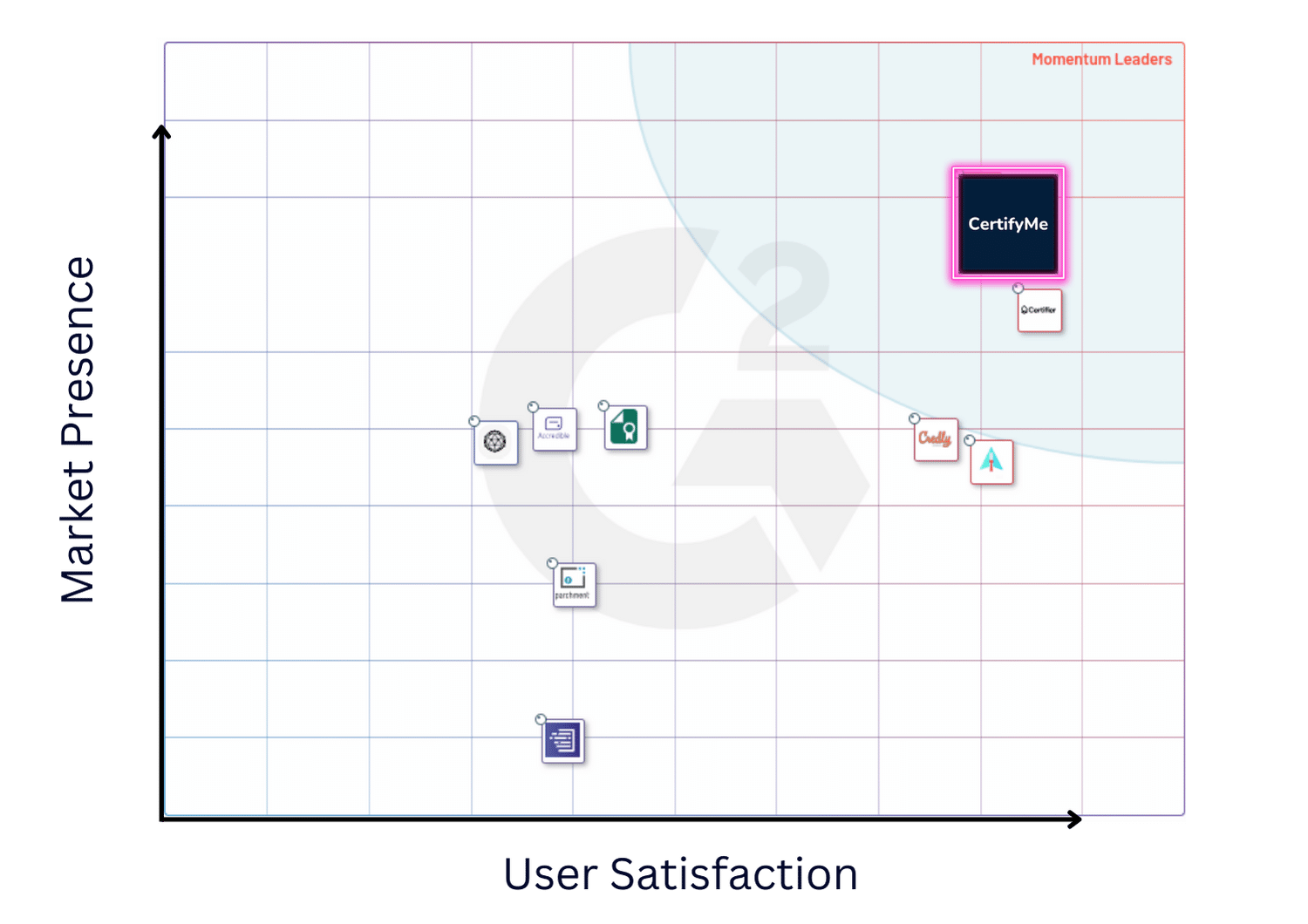
See what reviewers say about CertifyMe
Ranked #2 in G2’s Digital Credential Management category by G2 Score, checked 3 October 2026. This is distinct from the separate #2 Easiest To Use placement. Ratings and rankings change; check the linked sources for current results.

Impressive range of features sets it apart as the ultimate solution for certificate verification. Their enterprise plan, along with customizable options, caters to diverse company needs, making it an awesome choice.

What truly stands out about CertifyMe is the remarkable support provided by their customer success team. They go above and beyond to ensure a seamless experience. Additionally, the platform boasts a clear and intuitive user interface, allowing easy navigation and customization.

As a training provider, we appreciate the user-friendly interface and customizable digital badging options, which our students enthusiastically showcase on their social media profiles.

It offers an end-to-end solution, is user-friendly with single-click awarding, enables students to share badges on LinkedIn, provides branding options, and has excellent customer support and training.